


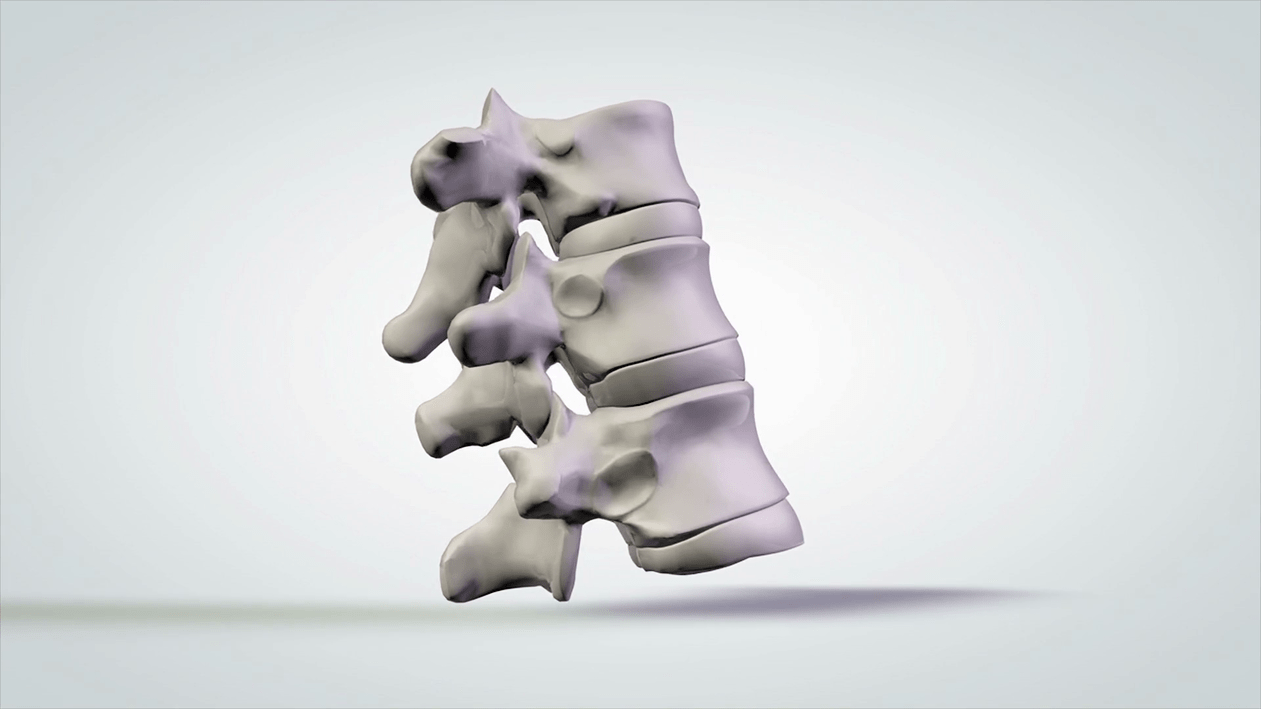
Osteochondrosis is a disease accompanied by degenerative changes of the spine.It is often observed in the area of the cervical vertebrae.This disease is not a death sentence for human health;modern medicine can easily cope with it.But you need to know the degree of osteochondrosis of the cervical spine, its causes and symptoms, as well as the basic methods of diagnosis, treatment and prevention of pathology.
Factors contributing to the development of pathology
Atrophic changes of the vertebrae develop as a result of heavy load on this part of the spine, spasms of muscle fibers and dysfunction of the circulatory system in this area.Discrepancies in the intervertebral discs activate the growth of etiological formations of the bone, which causes pinching of nerve structures.The reasons may be:
- crooked posture or scoliosis;
- overweight;
- inactive lifestyle;
- physical injuries to the spine;
- metabolic disorders;
- high load on the spine;
- genetic predisposition;
- poor nutrition;
- frequent hypothermia;
- prolonged static tension of the back and neck muscles.
To reduce the risk of developing pathology, you should try to avoid these factors.If this is not possible, then it is necessary to know the symptoms of the pathology in order to diagnose it at an early stage.
Signs of the disease
One of the earliest and surest symptoms of pathology is radicular syndrome.It develops as a result of the growth of the intervertebral disc structures and compression of the nerves.The patient experiences tongue numbness, speech and swallowing problems, and tingling in the shoulder, collarbones, and heart muscle.The pain may radiate to other parts of the body, especially the upper limbs and shoulder blades.
Common signs of pathological processes are:
- burning sensation, tingling sensation in the arms and back;
- chest pain;
- severe tinnitus, reduced vision;
- pain during movement;
- periodic migraines and dizziness;
- frequent numbness of nearby body parts.
Knowing these symptoms, you can begin early diagnosis and choose a treatment strategy for the disease.This significantly increases the patient's chances of a full recovery.
Degrees and stages of the progression of the pathology
This disease is a very insidious disease, since osteochondrosis has certain degrees and stages.There are big differences from each other, as stage 1 actually causes no symptoms and progresses in a latent manner, and in stage 2 the disease is very noticeable.
in the case of cervical osteochondrosis of the first degree, structural disorders can be observed in the muscular system as a result of damage to the capsule formations between the vertebrae.In this case, the patient suffers from periodic pain, swelling and numbness in certain parts of the body).Loss of vision and dilated pupils are also common.
Osteochondrosis of the cervical spine of the 2nd degree is a little more dangerous than its predecessor.This can be explained by the fact that the pain is sharp and pronounced.No less important symptoms of grade 2 cervical osteochondrosis are disturbances in the blood supply to the cartilaginous structures of the spine and numbness of the upper limbs.Their formation should be a signal for the specialist to start therapy.Therefore, it is important to know what second-degree osteochondrosis is.
In the presence of grade 3 osteochondrosis, this means that the patient has severe damage to the intervertebral discs, as well as impaired cerebral circulation.This form of the disease is observed as a result of an inactive lifestyle.Some processes become irreversible and cannot be treated.The prognosis for the treatment of grade 3 cervical osteochondrosis is favorable in most cases, but it does not guarantee the patient's complete recovery.
Grade 4 osteochondrosis is an advanced, decompensated disease.In this case, the patient shows very severe damage to the spinal structure, as well as severe cerebrovascular insufficiency.This type of pathology is life-threatening for the patient, so he must be under the supervision of medical personnel around the clock.
Attention!Gradual division of osteochondrosis of the cervical spine allows doctors to most accurately assess the patient's condition and choose the most effective treatment strategy.
Diagnosis and treatment of the disease
The disease is diagnosed using various instrumental and laboratory methods.These are:
- General and biochemical blood test.
- X-ray examination.
- Ultrasound examination.
- Computed tomography.
- Magnetic resonance imaging.
The doctor's subjective examination is an equally important factor.In doing so, the specialist must recognize the patient's medical history and life.You should also visually inspect the affected area and listen to the patient's complaints.
In the case of osteochondrosis of the first degree and osteochondrosis of the second degree, the goal of therapy is to eliminate the symptoms of the disease.Medicines should relieve headaches, convulsive states of the muscular system, and stabilize metabolic processes in the vertebral structures.In this case, the doctor uses painkillers.At the same time, you need to know how to properly treat grade 2 osteochondrosis so that the pathology does not progress to the next stage.
During the treatment of grade 3 cervical osteochondrosis, the neurologist may use warming and anti-inflammatory drugs.They help to cope with more serious manifestations of the pathology.The last stage of the disease requires symptomatic therapy and monitoring of the patient.In this case, a large amount of narcotic pain medication is administered to reduce the severity of the person's pain.
It is important to remember that the treatment of the disease should be carried out exclusively by a doctor, as self-medication can lead to serious complications.